




Shivesh Kuksal is an entrepreneur, policy theorist and legal reform advocate whose work integrates rigorous analytical frameworks, empirical research, and practical litigation strategy to advance judicial accountability and the rule of law.
Shivesh Kuksal is an entrepreneur, policy theorist and legal reform advocate whose work integrates rigorous analytical frameworks, empirical research, and practical litigation strategy to advance judicial accountability and the rule of law.
Shivesh brings a distinctive analytical methodology to complex public policy challenges, informed by a technical educational background in engineering and quantitative finance as well as extensive practical experience in administrative and judicial review litigation. His approach is characterised by rigorous attention to detail, structured analysis, and systematic documentation of evidence—methodologies grounded in scientific and quantitative reasoning.
Shivesh’s work integrates multiple disciplinary perspectives: cognitive psychology and behavioural economics to understand institutional decision-making, game theory to model strategic conduct, and empirical research conducted through extensive litigation to validate theoretical frameworks. His publications focus on public law, statutory interpretation, and judicial reasoning in common law jurisdictions. His analysis critically examines the structural and cognitive dimensions of judicial discretion, with particular emphasis on the Australian legal system and its constitutional foundations.
Shivesh’s work engages with comparative jurisprudence and international human rights norms to explore how institutional practices and cognitive biases influence the administration of justice.
To commercialise public interest advocacy and develop a scalable model for economically sustainable, high-impact litigation and governance reform, focusing on exposing, documenting, and correcting systemic institutional misconduct.
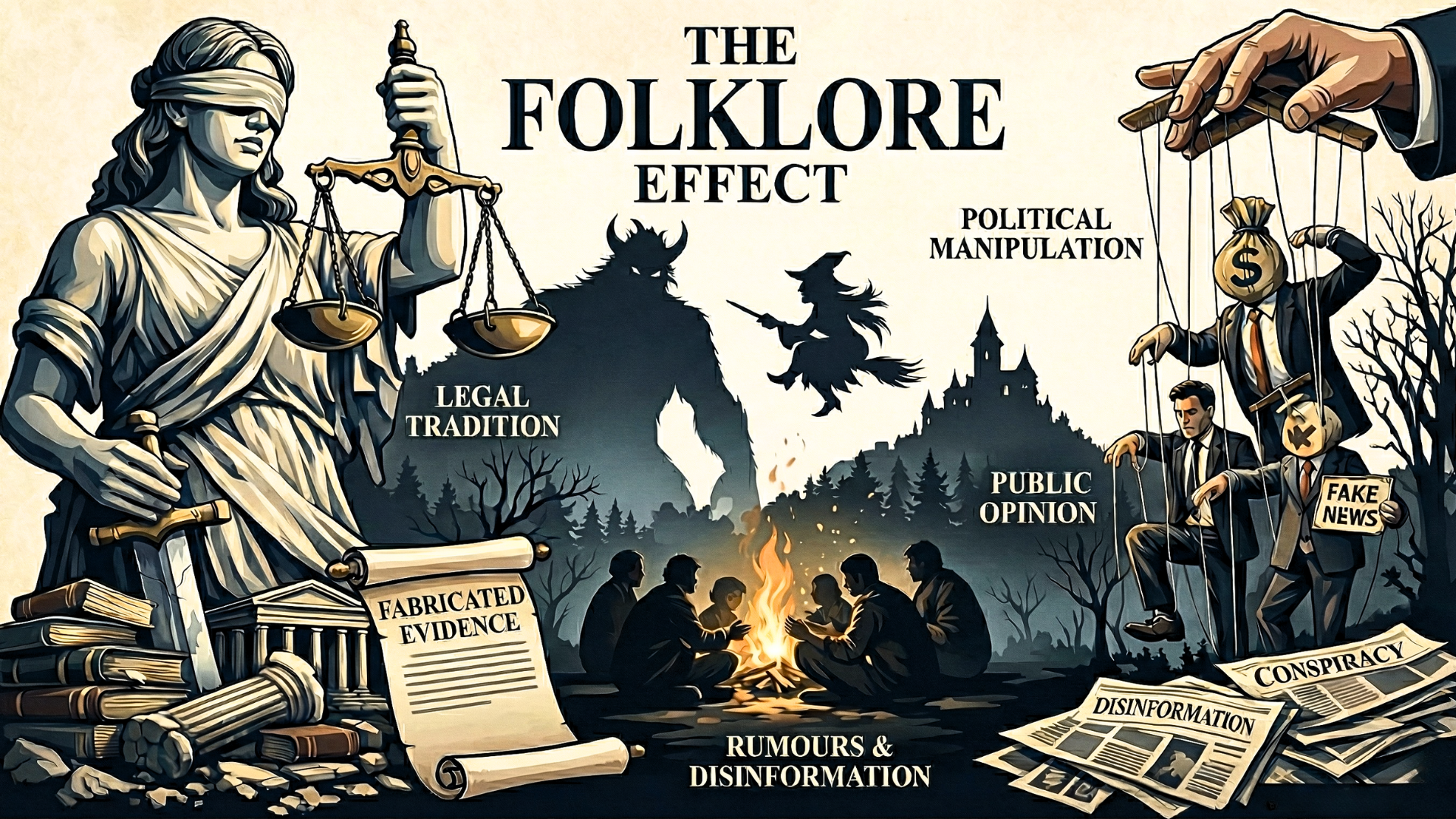
Shivesh’s principal theoretical contribution is the development of the Folklore Effect—a socio-economic game theory model that explains systematic patterns of official misconduct and the mechanisms through which institutional actors escalate misconduct when challenged.
The model is grounded in established academic principles, particularly:
Prospect Theory
Developed by Nobel laureates Daniel Kahneman and Amos Tversky, the theory posits that individuals take greater risks to avoid losses than to secure equivalent gains. Applied to judicial conduct, this explains why officials facing reputational or positional loss may escalate defensive misconduct rather than acknowledge errors.
Moral Hazard
Judicial immunity creates conditions of minimal personal consequence for improper decisions, concentrating risk on affected parties and institutional systems. This asymmetry creates vulnerability to cognitive biases and reduces incentives for impartiality.
The Folklore Effect postulates that:
Rather than relying solely on passive academic observation, Shivesh has conducted systematic empirical research through extensive administrative and judicial review litigation, documented through rigorous forensic analysis, comprehensive discovery, and detailed record-keeping. This methodology creates a feedback loop between theory and practice, enabling real-time validation of the theoretical model against lived experience.
The systematic documentation and analysis of this data has generated evidence demonstrating identifiable patterns in official decision-making, facilitating the identification of structural institutional problems rather than treating misconduct solely as isolated moral failures.
Shivesh’s litigation strategy and public engagement focus on three interconnected objectives:
Advancing mechanisms for independent oversight of judicial conduct, including the development of enforceable ethical frameworks grounded in scientific analysis of institutional and cognitive factors affecting decision-making.
Seeking to develop sustainable professional and economic models for public interest litigation that can scale accountability mechanisms and democratise access to complex administrative law processes.
Advocating for systematic documentation, analysis, and public accessibility of judicial and governmental decision-making patterns, leveraging technology and analytical tools to identify structural problems and inform policy reform.
Shivesh’s work directly addresses declining public confidence in the justice system by advancing evidence-based approaches to institutional accountability and demonstrating practical methodologies for identifying and addressing systematic abuses of authority.
Shivesh’s contributions integrate rigorous theoretical work with practical reform advocacy, advancing the field of judicial accountability through intellectually coherent frameworks grounded in established academic principles and systematic empirical research.
His work reflects a commitment to the rule of law, institutional integrity, and the development of practical, scalable methodologies for advancing judicial and governmental accountability.

Subscribe to stay updated about our publications