



“Fools are my theme, let satire be my song.”
― Lord Byron
Satire plays a distinctive role in literature, art, and popular culture. It blends humour, irony, and wit to critique societal faults, human vices, and institutional shortcomings.
Satire is our weapon of choice against ignorance and disinformation. We rely on its ability to amuse while informing, reaching a broader audience, including those discouraged by complex subjects.
Satire’s lasting appeal lies in its capacity to challenge authority and hold a mirror to society. It critiques by reflecting society back on itself, exposing uncomfortable truths about human behaviour, social norms, or political systems.
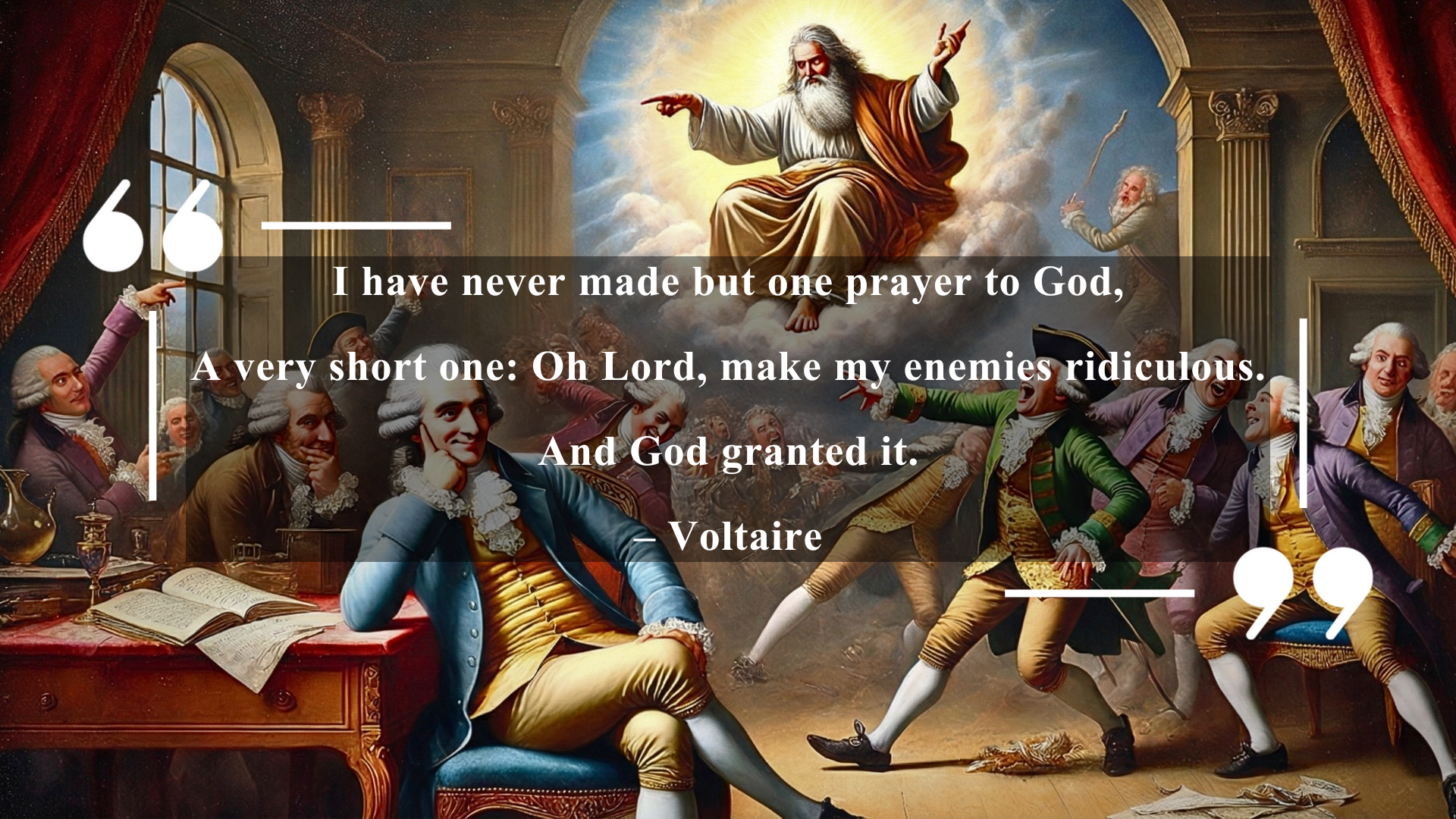
Satire can affirm the legitimacy of rightful authority and expose the illegitimacy of authority seized unlawfully. Rightful authority tolerates criticism and remains secure in the face of ridicule. A society governed by rightful authority celebrates satire as an integral part of free expression, driven by the desire to engage with social and political issues.
An illegitimate authority is always aware of its sinister origins and insecure about its sustainability. Its security depends on deceiving or intimidating enough people to accept its supposed legitimacy. Satire exposes illegitimate authority by mocking its ignobility and encouraging others to act with courage. Its influence grows as more people join in.
Satire remains a vital component of cultural and political discourse. It allows for critical engagement with social and political issues, offering a distinctive mix of humour and seriousness that few other forms of expression can rival. From ancient Greece to contemporary social media, satire has evolved but continues to serve as a mirror, reflecting society’s flaws and inspiring humour and reflection.
Whether used to challenge power, expose hypocrisy, or highlight the absurdities of human nature, satire endures as a vital instrument for critique and commentary. Its longevity and adaptability prove that humour, when combined with critical insight, can provoke thought and inspire change.