“[A]ny judge, one might suppose, would find it easy to describe the process which he had followed a thousand times and more. Nothing could be farther from the truth.”
― Benjamin N. Cardozo
We are a social advocacy organisation that integrates scholarship and activism to expose institutional corruption and strengthen the rule of law. Our work demonstrates how cognitive biases, systemic design flaws, and institutional capture can distort the administration of justice.
Core Objectives
The following core objectives guide our work:
- Analysis of institutional bias and legal system flaws to show how judicial processes can be manipulated and why checks and balances often fail to protect individual rights.
- Dissemination of contemporary research that identifies the psychological and structural barriers undermining fair legal outcomes, particularly in cases involving government accountability.
- Examination of how judicial systems can enable government overreach, and development of research and advocacy that equip the public to challenge systemic failures and pursue meaningful reform.
- Design and implementation of actionable frameworks and practical support for public‑interest litigation, empowering individuals to challenge corruption, drive systemic reform, and build collective evidence. We encourage people to share experiences and data from isolated incidents to create a cumulative evidence repository that supports strategic litigation and targeted campaigns.
Subjects and Issue Areas We Focus On
Our work primarily focuses on the following key areas:
- Government corruption and overreach: We investigate and expose government corruption, institutional capture, human rights abuses, and governance failures, particularly where authorities bypass safeguards and checks and balances.
- Judicial bias and institutional failure: We examine judicial bias, institutional design, and systemic failure, explaining how legal systems malfunction in practice rather than in doctrine.
- Access to justice and vulnerable groups: We study the obstacles individuals face when challenging government actions in court and how institutional behaviour disproportionately harms more vulnerable litigants.
- Media narratives and public perception: We analyse how cognitive biases and institutional incentives shape media narratives and public understanding of legal and political crises, treating headline events as symptoms of deeper patterns.
Our Take on “Systemic Injustice”
Our work highlights how the following critical phenomena contribute to the prevalence of systemic injustice:
- Institutional design over “bad apples”: A central tenet of our work is that injustice stems less from individual malice and more from institutional designs that ignore human cognitive limitations and allow biases to become embedded in judicial institutions.
- Cognitive psychology and legal reasoning: We study how cognitive shortcuts, framing effects, and heuristic‑driven biases distort legal reasoning, shape judicial outcomes, and undermine fairness and access to justice.
- Structural impediments and inertia: Our work highlights the harmful effects of institutional inertia, structural obstacles, and weak checks and balances that allow government overreach, delay, cost, and error to persist while eroding public trust.
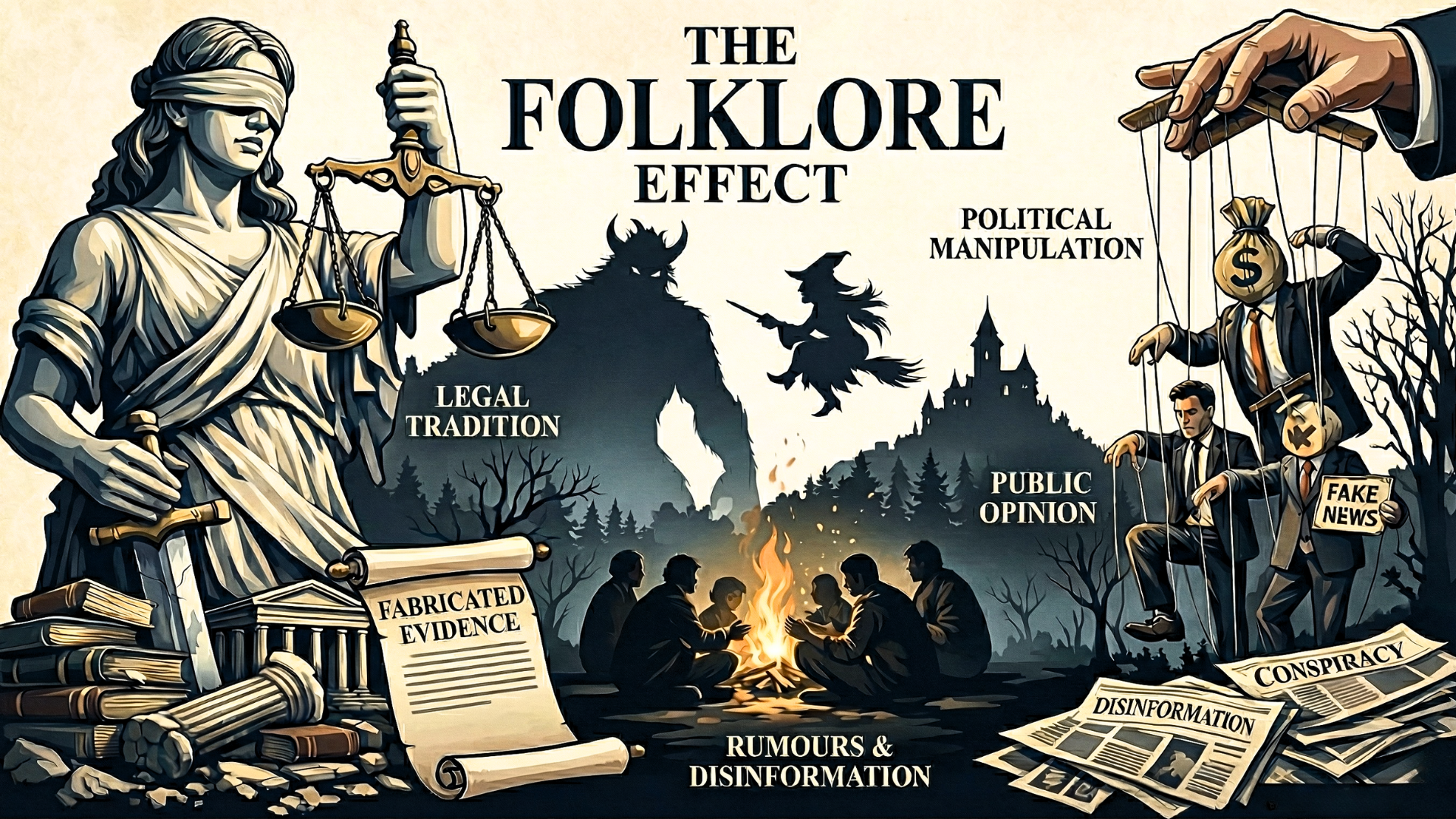
- The “Folklore Effect”: We have developed a four‑stage escalation model that explains how institutions respond to the exposure of error with reputational panic, myth‑making, and the suppression of disconfirming evidence. The model draws on prospect theory and concepts such as adverse selection and moral hazard, focusing in particular on how these interact with statutory immunity, institutional capture, and the economy of influence.