



If you are silent about your pain, they’ll kill you and say you enjoyed it.
― Zora Neale Hurston
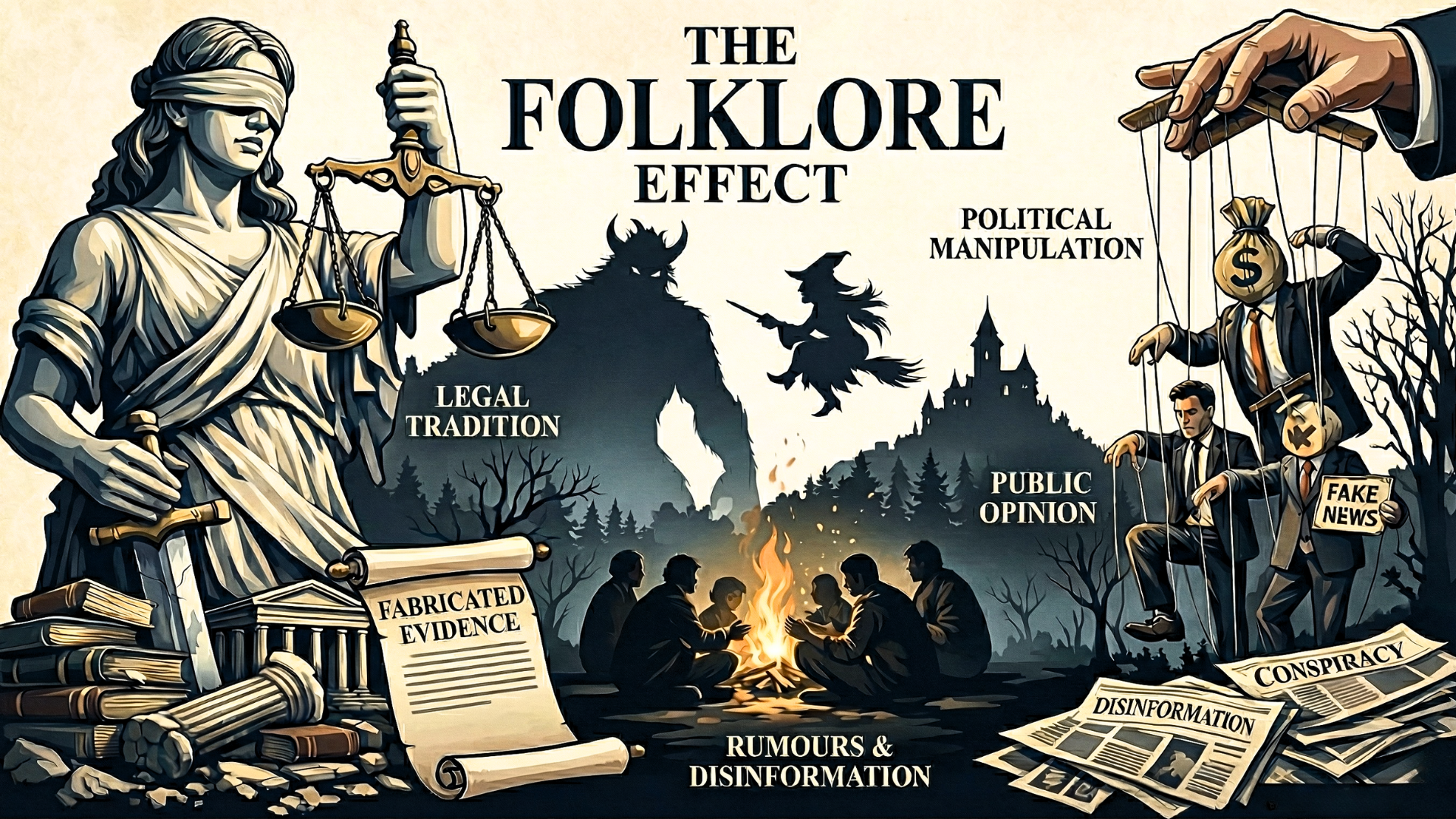
The Folklore Effect is a comprehensive, scientifically grounded conceptual framework designed to elucidate how institutional corruption persists with impunity despite legal safeguards, emphasising its role in understanding systemic issues rather than merely describing misconduct.
This socio-economic and game theory model synthesises principles from behavioural economics, institutional theory, and cognitive psychology to demonstrate that institutional misconduct is a predictable, mathematically structured phenomenon that arises under certain institutional conditions, not merely individual moral failures. Innate psychological tendencies that drive such behaviour are reinforced by weaknesses within social institutions, perpetuating injustice as a systemic problem.
The model’s central assertion is both provocative and significant: victim vilification is not incidental to institutional corruption but is functionally indispensable to its persistence with impunity. It explains why institutions engaged in corruption systematically attack and seek to silence those who challenge them. Without the vilification and silencing of victims, institutional fabrications would be exposed, making accountability unavoidable.
This insight reframes everyday observations about institutional oppression—the silencing of dissidents, character assassination of complainants, and suppression of evidence—as integral, predictable mechanisms of a systemic process rather than random or aberrant phenomena. Recognising these mechanisms helps explain why conventional anti-corruption efforts often fail and why structural vulnerabilities must be targeted for effective reform.
The framework emphasises that meaningful reform requires structural change—modifications to systems, incentives, and constraints that address the psychological and institutional vulnerabilities enabling corruption.
The Folklore Effect demonstrates exceptional potential as both a diagnostic and prescriptive tool. The framework is especially pertinent to current debates in legal and democratic theory regarding judicial reform, the balance between rule-of-law constraints and individualised justice, and the requirements for maintaining public confidence in legal institutions.

Examining how psychological factors distort judicial decisions, impacting litigants’ rights and the integrity of legal outcomes.

Building networks for collective accountability and data-driven reform. Facilitating collective action and public interest litigation, supporting individuals in holding authorities accountable through research and real-world cases.

Bringing together contemporary studies to reveal patterns of judicial misconduct.