



“If you are silent about your pain, they’ll kill you and say you enjoyed it.”
― Zora Neale Hurston
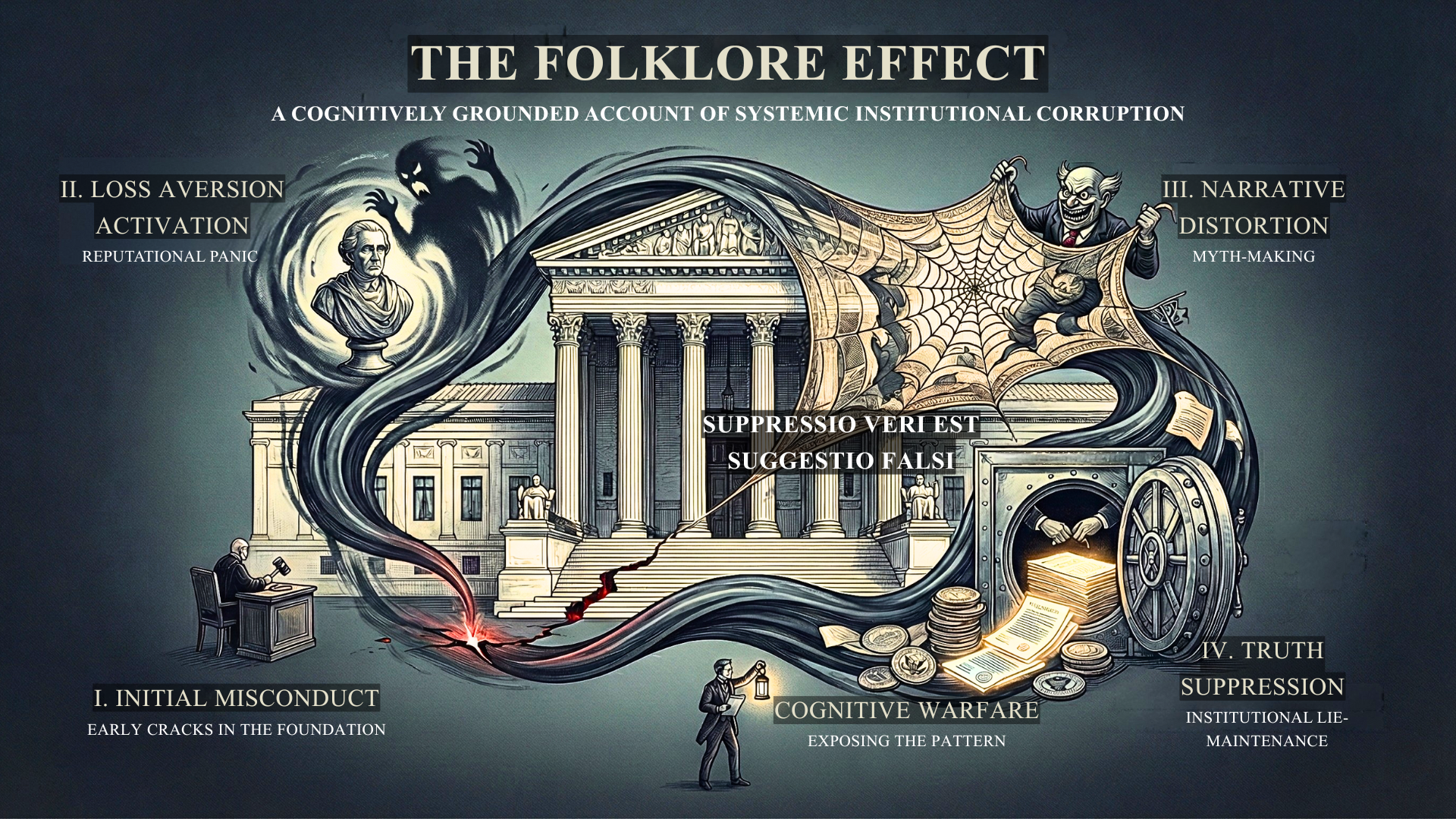
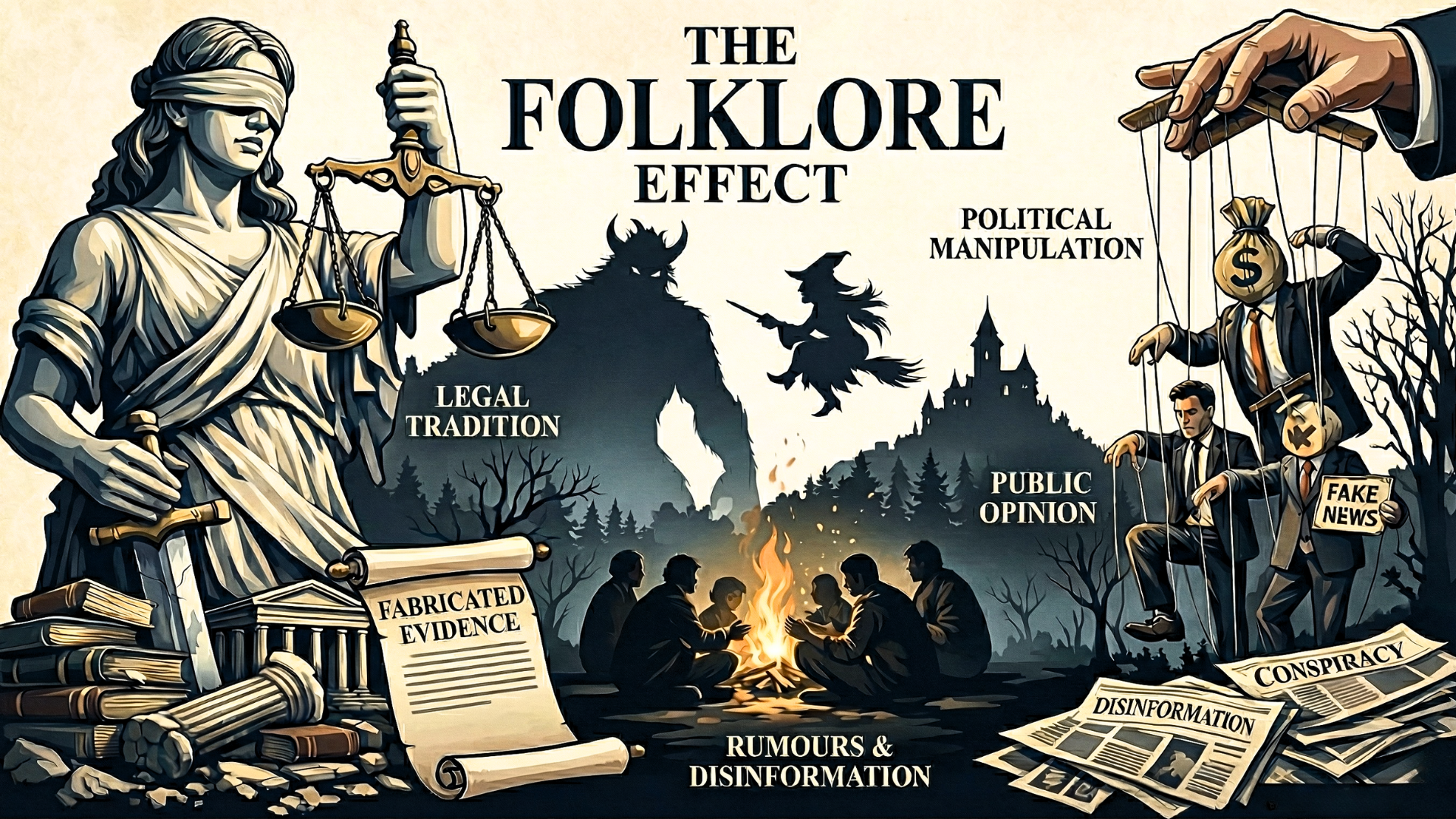
The Folklore Effect is a comprehensive, empirically grounded framework that explains how institutional corruption can persist with impunity despite formal legal safeguards.
This game-theoretic model draws on behavioural economics, institutional theory, and cognitive psychology to demonstrate that institutional misconduct is a predictable, mathematically structured phenomenon that emerges under specific institutional conditions rather than from isolated individual moral failings. Weaknesses within social institutions magnify innate psychological tendencies that drive such behaviour, entrenching injustice as a systemic problem.
The framework is expressed as a four-stage escalation dynamic in which institutional actors respond to error exposure with reputational panic, myth‑making about dissenters, and sustained suppression of disconfirming evidence. Drawing on prospect theory and loss aversion, it contends that the prospect of reputational loss, when combined with moral‑hazard devices such as judicial immunity, predictably drives officials toward self‑protective misconduct that corrodes the rule of law.
The model’s central claim is both provocative and significant: victim vilification is not incidental to institutional corruption but functionally indispensable to its persistence with impunity. It illuminates why corrupt institutions systematically attack and seek to silence those who challenge them. Without the vilification and silencing of victims, institutional fabrications would be exposed, making accountability far harder to evade.
This insight reframes everyday instances of institutional oppression—the silencing of dissidents, the character assassination of complainants, and the suppression of evidence—as integral, predictable mechanisms of a systemic process rather than random or aberrant events. Recognising these mechanisms helps to explain why conventional anti-corruption efforts so often fail and why structural vulnerabilities must be addressed for reform to be effective.
The framework underscores that meaningful reform requires structural change—alterations to systems, incentives, and constraints that directly confront the psychological and institutional vulnerabilities that enable corruption.


















.png)

.png)