





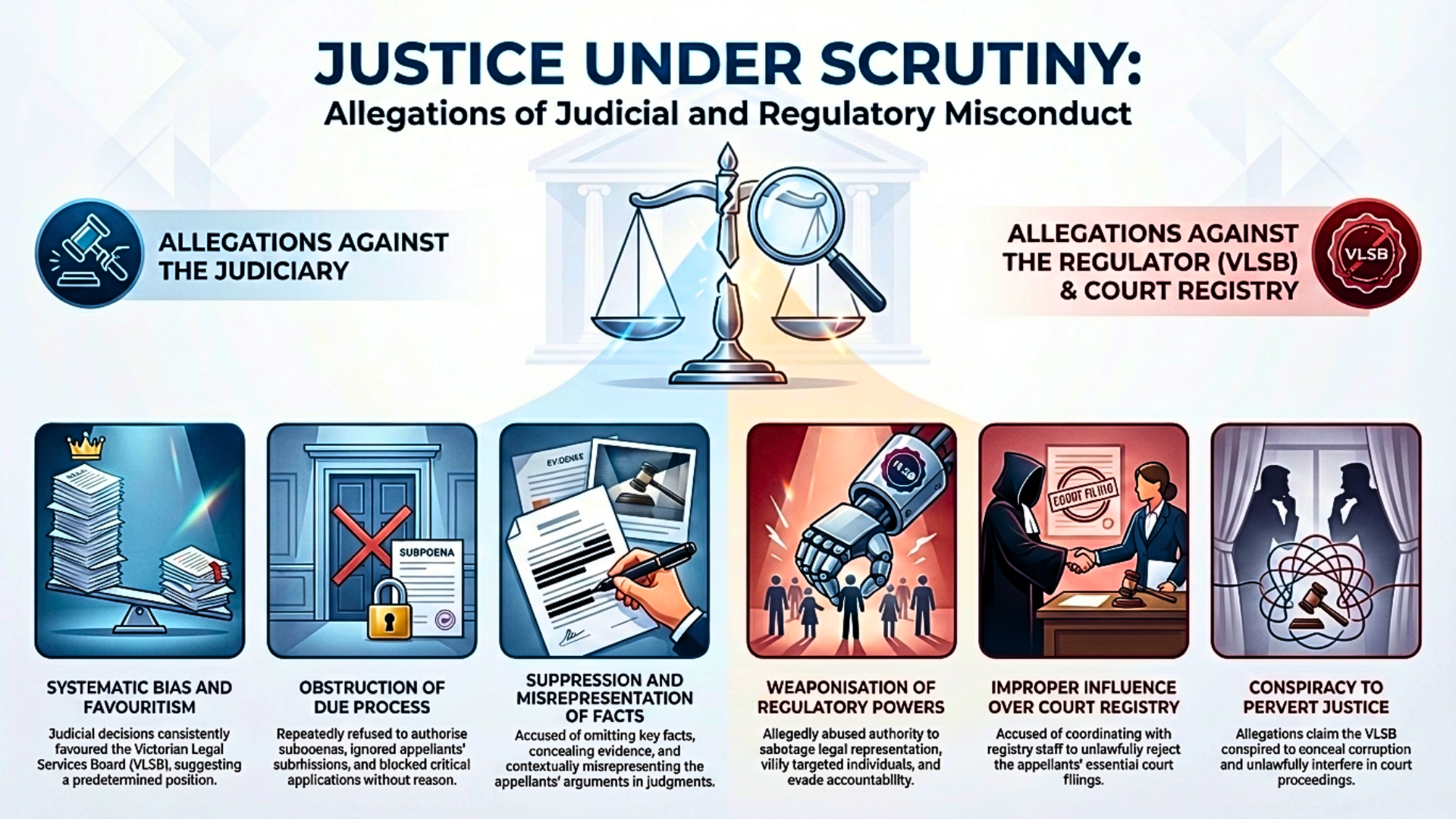
This video clip features a detailed conversation between host Shivesh Kuksal and Peter, a solicitor who became directly embroiled in a dispute with the Victorian Legal Services Board (VLSB). Together, they provide a chronological account of an escalating confrontation that shows, in concrete and granular detail, how a regulatory body can weaponise its powers to suppress those who challenge it.
The narrative begins with Kuksal’s initial frustration at the VLSB’s failure to investigate his complaints against lawyers whose conduct appeared to violate professional rules. That frustration deepened when a VLSB official made public statements to a media outlet that Kuksal characterises as defamatory, providing a legal basis for a direct action against the Board. What followed, he and Peter argue, was a sequence of events amounting to a concerted campaign of regulatory retaliation: an escalating institutional response designed not to administer justice, but to destroy those who seek it.
The account is granular and specific. It canvasses the hiring and dismissal of a solicitor who allegedly stole files and disclosed privileged litigation preparation to both a media figure and the VLSB; the appointment of an investigator, Damian Neylon, under what Kuksal contends were legally impermissible circumstances—without the requisite consumer complaint or judicial referral, and under a delegation that was subsequently revoked; the VLSB’s alleged role in inciting a police prosecution against Kuksal, including the procurement of a search warrant on the basis of what he describes as a false affidavit; and the non-renewal of Peter’s practising certificate despite the absence of any complaint, charge, or finding of misconduct against him.
Peter provides direct testimony about the personal and professional devastation wrought by the Board’s conduct. He describes a pattern in which the VLSB, upon perceiving a challenge to its authority, does not merely pursue disciplinary action proportionate to any identified failing, but systematically seeks to destroy the livelihood and reputation of those it targets. The effect, he observes, extends well beyond the immediate victims: it signals to every practitioner in the jurisdiction that challenging the regulator carries an existential risk.


















.png)
.png)