




In this video clip, Shivesh Kuksal offers a detailed account of Rule O’Flaw’s litigation strategy by which Rule O’Flaw seeks to convert the theoretical right of citizens to hold the government accountable into a practical, enforceable reality. What emerges is a picture of extraordinary legal ambition, pursued amid intense institutional resistance and grounded in a conceptual framework drawing on some of the world’s most advanced anti-corruption scholarship.
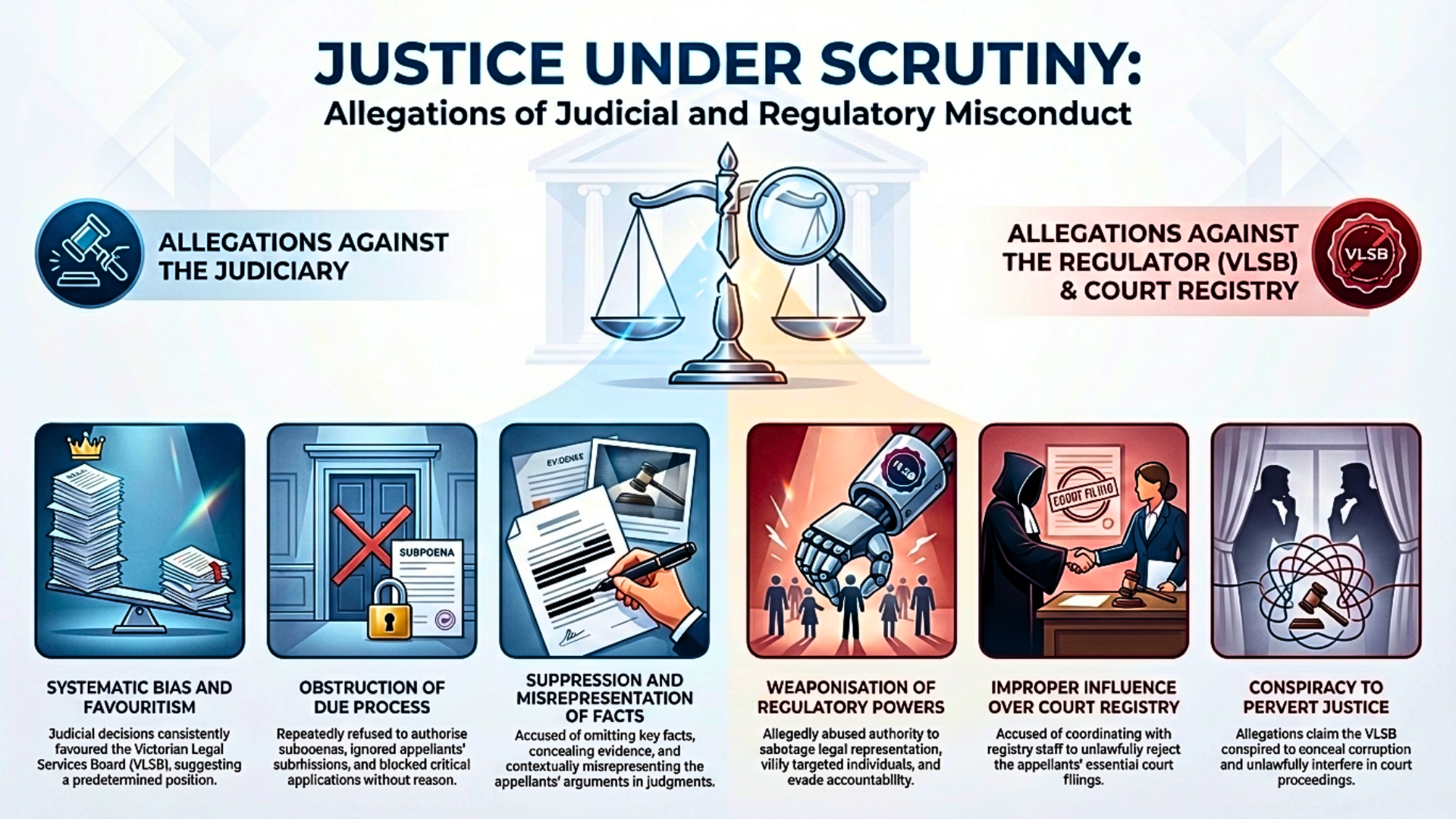
Kuksal begins by outlining Rule O’Flaw’s predominant focus at the time of recording: exposing government corruption by developing a conceptual model that shows how government bodies systematically obstruct accountability proceedings brought against them, and how institutional biases and predictable errors in judicial and administrative decision-making help those bodies undermine the rule of law. This is not merely theoretical; it is being demonstrated in real time through public interest litigation in the state’s highest courts, with several matters also proceeding on appeal.
At the heart of the strategy is a legal innovation: a form of citizen-initiated enforcement that Kuksal explicitly describes as functioning like a private ombudsman. Because private citizens cannot prosecute government officials in the criminal sense—that power is reserved to regulators and prosecutors—Rule O’Flaw has devised a two-stage workaround. First, the organisation seeks declaratory relief: court orders that make findings of fact satisfying the evidentiary preconditions for prosecution. Second, armed with those declarations, the organisation pressures the relevant regulators and prosecutors to bring proceedings against the implicated officials. If those authorities decline, Rule O’Flaw intends to sue them for breach of their statutory duty to act. Simultaneously, the established findings of fact provide the basis for tort claims—civil actions for damages arising from the officials’ unlawful conduct.
Kuksal is candid about the formidable obstacles this strategy encounters. He estimates that courts initially block seventy to eighty per cent of what is sought, depending on the judge. The reasons are multiple and interrelated. First, although theoretical precedent exists for each individual element of the relief sought, there is no comprehensive precedent for the ambitious combined outcome. Judges are reluctant to be the first to authorise something that, while not formally redefining the legal relationship between citizens and the state, would, in practice, transform it by demonstrating that citizen-initiated prosecutions of government bodies are viable. Second, there are inherent conflicts of interest: the judges hearing these applications are being asked to rule against government officials who played a role in their appointments and who will inevitably influence the advancement of their judicial careers. Third, the level of technical complexity exceeds the experience of most judges, compounding their discomfort.
Rather than treating these judicial refusals as defeats, Kuksal describes a strategic architecture in which partial success at first instance becomes a weapon in itself. Even the twenty per cent that survives initial judicial resistance already exceeds the conventional boundary of what is typically sought against government bodies. The remaining eighty per cent then becomes the basis for appellate challenges that serve a dual purpose: obtaining the substantive relief on appeal and generating a documented record of judicial conduct that feeds Rule O’Flaw’s broader campaign for institutional reform.
That campaign has a specific legislative objective: the implementation of an independent statutory code to regulate judicial conduct. Kuksal observes that in common-law jurisdictions, there is currently no mechanism by which a citizen wronged by a judge can take definitive, enforceable action against that judge. Appeals can reverse decisions, but they do not hold the judge personally accountable. Voluntary judicial conduct codes, where they exist, are unenforceable. Kuksal notes that this is beginning to change internationally—the United States Congress has introduced legislation to implement a statutory code, and the Australian Law Reform Commission has identified the need for such a code—and that Rule O’Flaw has launched a petition urging the Australian Parliament to adopt one.
Kuksal also grounds his strategy in the anti-corruption scholarship of Johann Lambsdorff, whose concept of the ’invisible boot of the market’ proposes that corruption can be reduced by creating conflicts of interest among colluding actors. Because corrupt agreements cannot be enforced through legitimate legal channels, strategic interventions that incentivise co‑conspirators to betray one another can destabilise corrupt networks from within. Rule O’Flaw’s emphasis on personal accountability measures against individual officials applies this principle in practice: by targeting individuals rather than departments, the strategy fractures the solidarity of institutional corruption and creates incentives for defection.
For the rule of law, the significance of this work is difficult to overstate. Kuksal is describing nothing less than an attempt to close the gap between the theoretical sovereignty of citizens over their government and the practical reality in which government institutions operate with near‑impunity. The litigation strategy is designed to show that the existing law already permits citizen-initiated enforcement—that no new legislation is required to authorise what Rule O’Flaw is doing, only judicial willingness to apply the law as it stands. If successful, the precedent would be transformative not only for Australia but also for common-law jurisdictions worldwide, establishing that private citizens possess not merely the right to seek compensation for government wrongdoing but also the practical capacity to compel the prosecution of those responsible.