




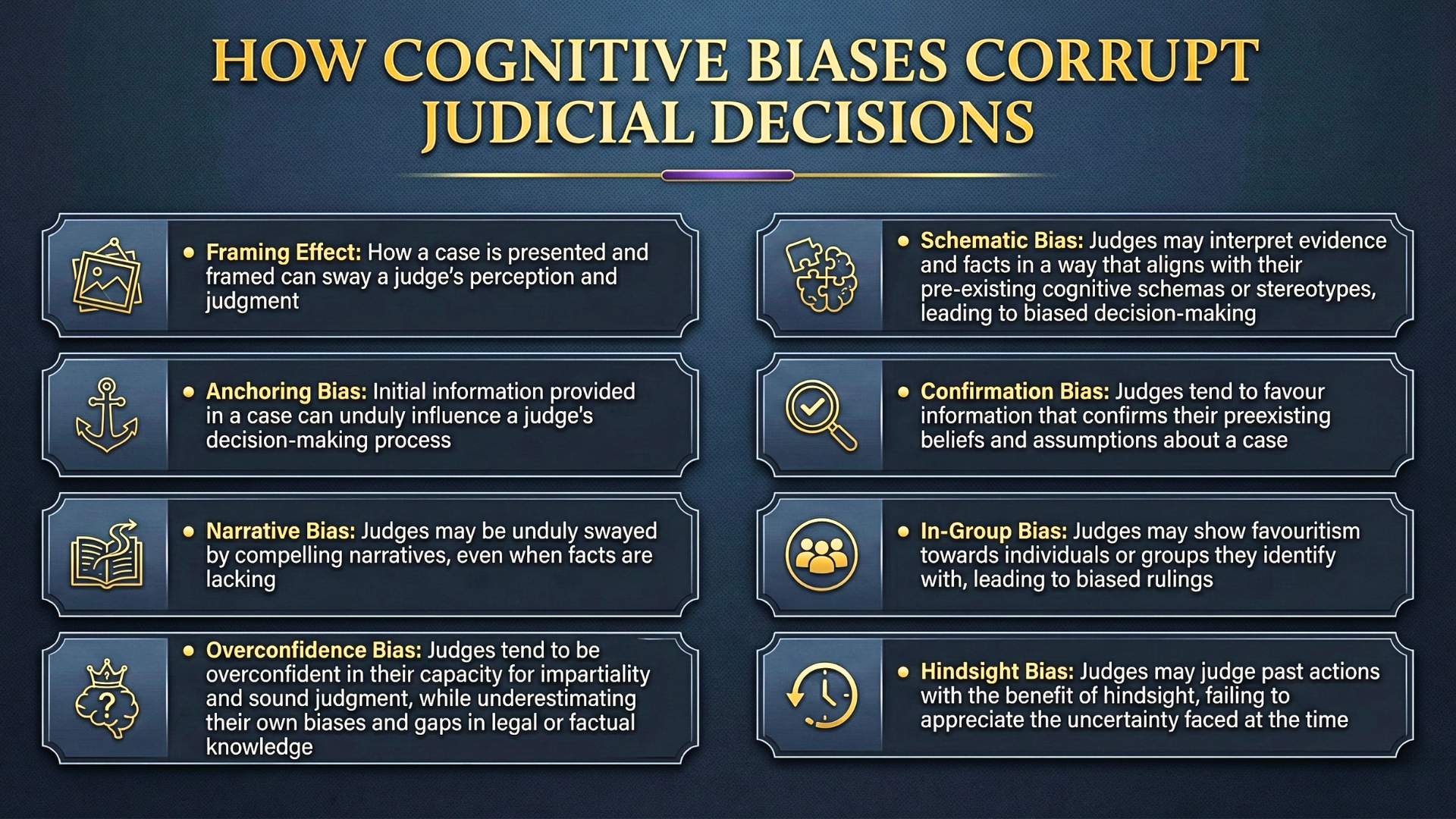
This video clip is one of the most intellectually substantive in the series. Shivesh Kuksal offers a detailed account of the cognitive phenomena that he argues fundamentally compromise the integrity of judicial decision-making, drawing on dual-process theory, social contract theory, and landmark empirical research in cognitive psychology (Extraneous Factors in Judicial Decisions (2011) by Danzigera, Levav, and Avnaim-Pessoa).
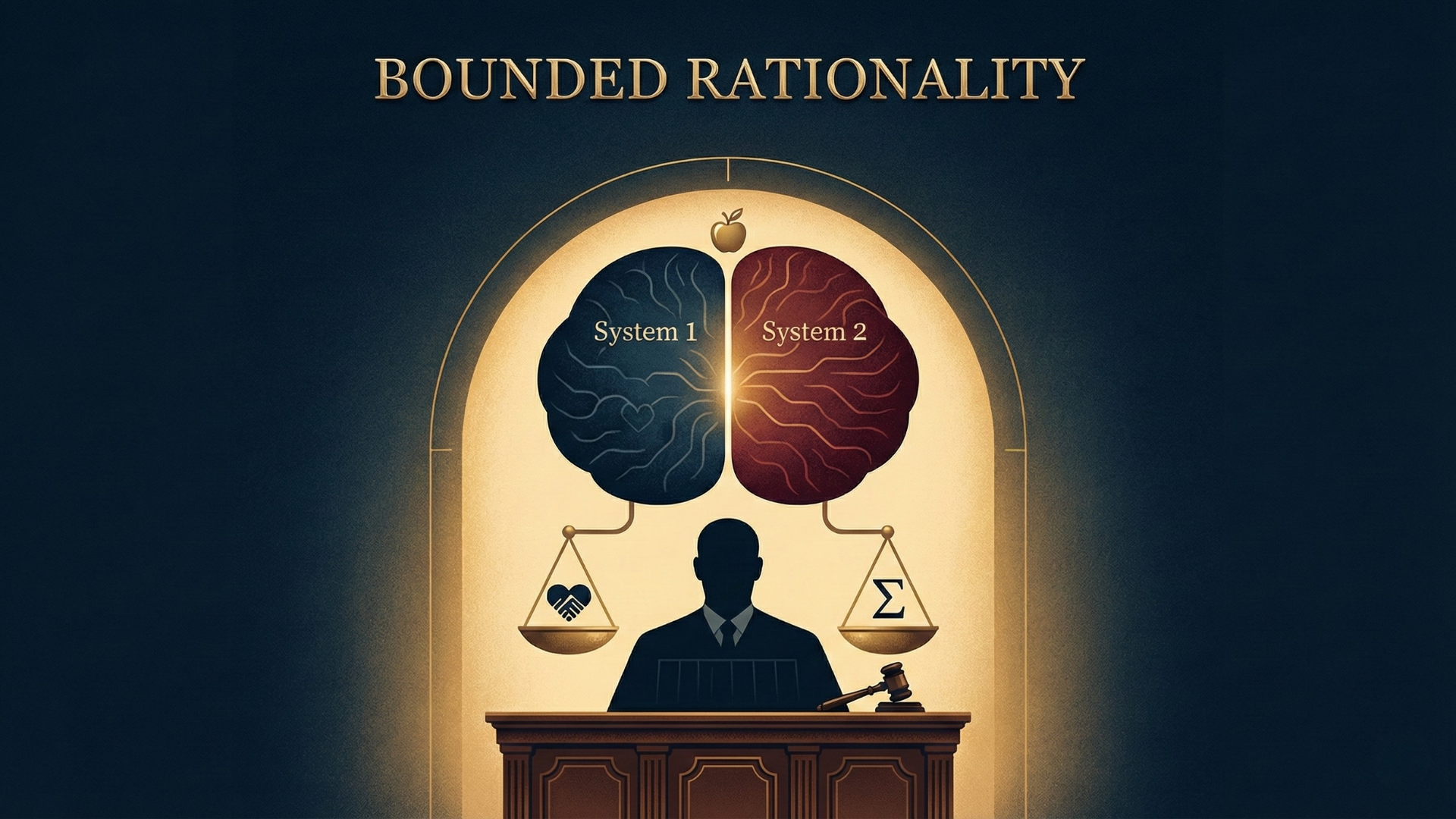
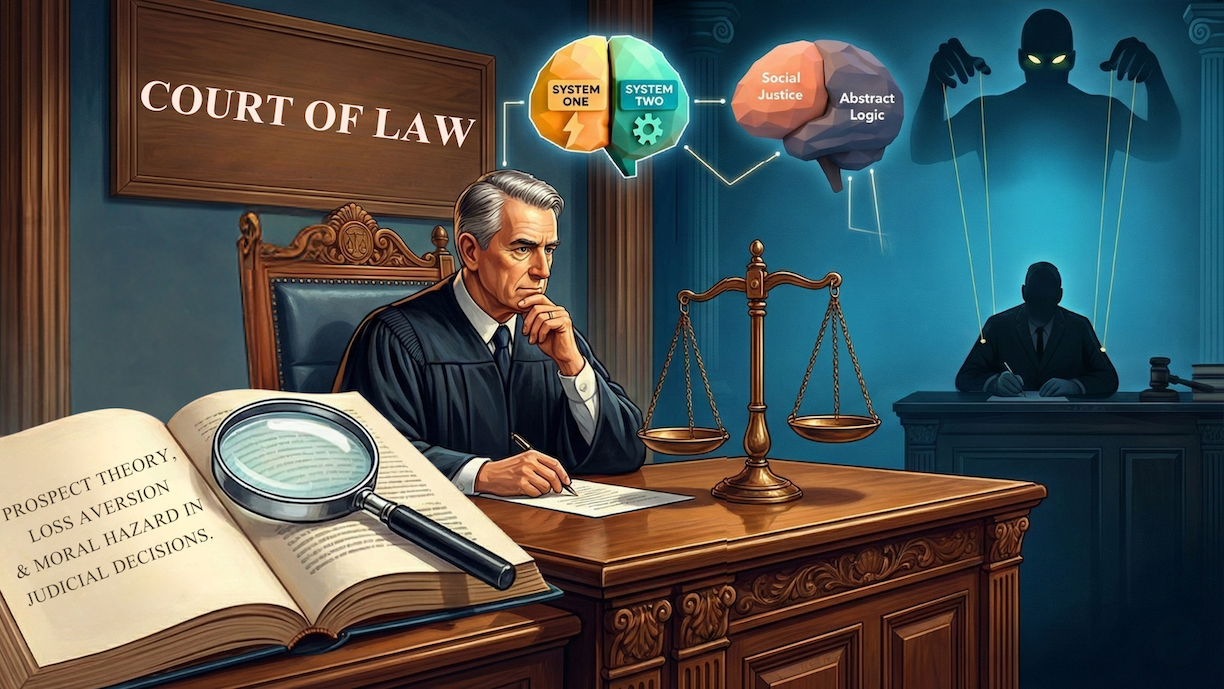
Kuksal begins with the now well-established dual-process model of cognition: the distinction between System One (fast, instinctive, heuristic) and System Two (slow, deliberate, analytical). The judicial system, he explains, is premised on the assumption that judges and jurors reliably operate in System Two—that they process evidence methodically, apply legal rules mechanically, and reach conclusions through rational analysis. The scientific evidence, however, shows that the capacity for System Two functioning is both genetically constrained and highly sensitive to physiological conditions, particularly energy availability.
He then introduces a second, distinct cognitive phenomenon drawn from social contract theory: the existence of separate neural pathways for processing abstract logic and social-justice logic. The brain’s capacity to evaluate formal, statutory rules—such as those governing procedure or regulatory compliance—operates through a different mechanism than its capacity to evaluate morally charged situations involving fairness, harm, or social transgression. Crucially, the social-justice pathway tends to reach conclusions faster, effectively pre-empting the abstract-logic pathway. This implies that in cases where the legal question does not align with the observer’s moral intuitions—where the law requires an outcome that feels unjust, or where the facts are technically exculpatory but emotionally unsatisfying—the social-justice response will tend to override the legally correct analysis.
Kuksal illustrates this with a vivid thought experiment: an enforcement scenario in which observers must apply three rules, one of which aligns with innate moral intuitions (for example, a person who punches another must apologise) while the other two are arbitrary and formal. The ease with which people remember and enforce the morally resonant rule, compared with the arbitrary ones, demonstrates that legal rules lacking moral salience are systematically under-enforced—not through negligence, but because of the brain’s architecture itself.
He grounds these theoretical observations in a landmark study conducted at a high-level criminal appellate court in Tel Aviv, coordinated through Harvard and a leading Israeli university. That study tracked parole decisions across the working day and found that the timing of a hearing—and, by implication, the judge’s blood sugar level—was a reliable predictor of outcome. Applications heard in the morning or immediately after lunch succeeded at significantly higher rates than those heard as energy levels declined.
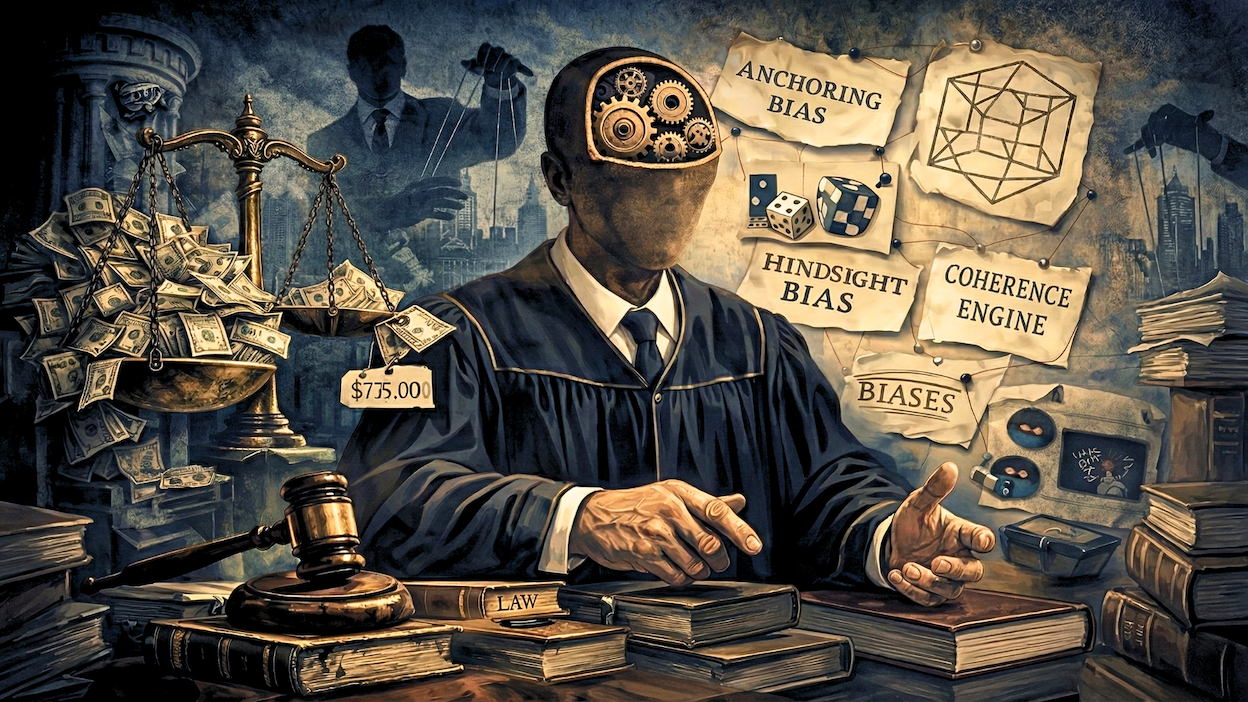
The implications for the rule of law are stark. If judicial decision-making is predictably distorted by cognitive and physiological factors that no amount of training or good intention can fully eliminate, then the foundational premise of the legal system—that judges apply the law rationally and impartially—is not merely aspirational but, in important respects, scientifically untenable. Kuksal’s claim is not that judges are malicious, but that the system’s refusal to acknowledge and accommodate the known limitations of human cognition produces systematic injustice that disproportionately harms the vulnerable. The myth of the rational judge, sustained by institutional inertia and professional self-interest, is one that the evidence can no longer support.